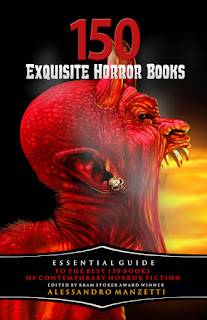
Alessandro Manzetti, 150 Exquisite Horror Books. Crystal Lake Publishing, 2021. Pp. 210. ISBN 978-1-7377-2187-1. $11.99.
Reviewed by Rachel Verkade

Reviewed by Rachel Verkade
Reviewed by M.L. Clark
Reviewed by Lisa Timpf
Reviewed by M.L. Clark
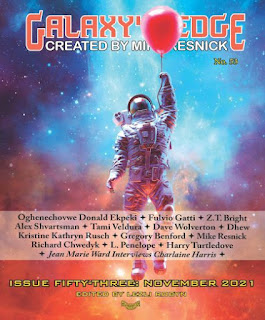
This winning story, which opens the issue’s fiction section, involves a mother in an orbiting station over Guangdong Province. Its occupants are a mother and her “son,” an insectoid alien who has chosen the name Zhuang after her first son, buried on the Earth below. The story follows the mother as she relives her initial struggle to understand her first son’s choices to set out on his own, in keeping with his sense of service to nation and species—and her chance to respond differently now, when her second “son” also presents his own need to move on.
Reviewed by Jason Kahler
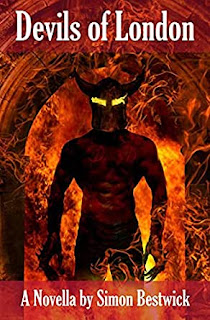
Reviewed by M.L. Clark
Reviewed by Djibril al-Ayad
 Twisted Moon is a yearly magazine of speculative erotic poetry based in Australia that has been published online since 2016. Editors Rook, Edda, Duck-Chong and Maris are all also writers (some of whose work we’ve seen and loved elsewhere), and they bring a lover’s touch to the selection and presentation of poems in each issue. The contents are eclectic, as is perhaps inevitable with collections of poetry, and range from delicious, lyrical verses to the most discordant, experimental or opaque of forms, always tantalizing and excruciating and challenging.
Reviewed by M.L. Clark
 Editor Cécile Cristofari opens Reckoning 5 with a call to action shaped by how pandemic has significantly isolated us from nature; we cannot simply rely on nostalgia to deepen our fight against ongoing natural depreciation from climate change and other human-made devastations. Editor Leah Bobet adds, in her following editorial, that the quest for poetry here was shaped by little intimacies, “flecks of possibility” for reconnection with the world around us, in our most personable and fleeting interactions with the rest of nature.
Reviewed by Cait Coker
 The 2014 translation of Cixin Liu’s The Three-Body Problem by Ken Liu into English became an unexpected defining moment in the field; there is now only “before” and “after” when talking about Chinese science fiction in the Anglo world. It is significant, then, that in her introduction to Sinopticon: A Celebration of Chinese Science Fiction, that editor Xueting Christine Ni describes her experience looking for science fiction books after walking into a Xinhua bookstore (China’s biggest bookseller chain). She is surprised by the lack of genre fiction aside from Wuxia (historical fiction concerned with martial artists)*, and when she asks for Kehuan (Chinese science fiction) the clerk gestures her towards the children’s section. When Xueting protests and asks if they are really shelving material like Liu there, the clerk responds with “Oh! Why didn’t you say so before?” and leads her where the material is shelved near science education textbooks. This preliminary scene explains the value placed on Kehuan in China: still at the margins of popular culture despite undergoing a remarkable renaissance both at home, and especially, abroad. Xueting’s purpose in editing this volume is to illustrate the wide range of Chinese science fiction, translating thirteen stories that were originally published between 1991 and 2021. This thirty year review, as it were, is not presented chronologically or thematically, but rather lets each work stand against one another for the reader to enjoy. Xueting also provides, after each story, notes that discuss the author as well as context for the story’s creation and contents. Xueting also makes a point of providing gender parity in these selections, with just over half of the authors being women. The overall result is an incredibly solid, thoughtful, and exciting anthology that is genuinely one of the best I’ve read in ages.
Reviewed by M.L. Clark
 The Dark magazine’s November 2021 issue offers four stories that address different ways in which we find ourselves swept up by and made complicit in the unconscionable. In all, a binding thread is a perceived lack of agency—in some cases, even when the protagonist has absolutely made choices to do harm to others, too.
Reviewed by Gwen C. Katz
 I know I’m not the only one asking “What’s the deal with Kaleidotrope?”
I say that with the utmost admiration. Kaleidotrope is a small penny-a-word publication; I happen to love reading penny-a-word publications, but most readers (and writers) turn up their noses at them in favor of the splashy pro mags. Yet Kaleidotrope consistently appears alongside the likes of Lightspeed and Strange Horizons in reviews, award nominations, and best-of collections—virtually always the only subpro magazine on the list. Luminaries like Silvia Moreno-Garcia and Genevieve Valentine, who could presumably place a story anywhere, still sell their stories to Kaleidotrope for a couple of tenners. What makes it so special?
Reviewed by Jason Kahler
 In the days leading up to me finishing reading Richard Gadz’s excellent The Workshop of Filthy Creation, my significant other and I braved the COVID-draped movie theater for a special double-feature of the classic (1931) films Dracula and Frankenstein. I’d seen both of those movies before, of course, but I don’t think I’d ever watched them back-to-back, and certainly never on the big screen.
As much as I love both of those films, and appreciate them as important artifacts of film and cultural history, I don’t think I’d understood just how much I prefer Frankenstein until experiencing them in such direct juxtaposition. For starters, Dracula is just so slow, with so much of its menace focused on Bela Lugosi’s eyes just emoting dread. Frankenstein crackles with intensity, with desperation, and ultimately, with deeper questions about the nature of living and humanity. There’s just more on the shelf. Lugosi’s count may win the trophy for best performance between the two (though Karloff really does a great job of showing the monster’s despair through all that make-up), but Frankenstein is just a better movie.

