
The Dark, ed. Sean Wallace & Veronica Giguere. Issue 105 (February 2024). Prime Books. $1.99 or online at thedarkmagazine.com.
Reviewed by M.L. Clark
 Whispers in the dark are an excellent site for horror, and offer an important medium in the four stories of The Dark’s February issue.
In “Some There Be That Shadows Kiss,” the “whispers” are more figurative: set in the late 16th century, gossip and aspersions cast on anyone who might explain the suffering a town faces. In this case, witches are real, but also not nearly the worst kind of monstrosity that a human being can face. Communal betrayal, spousal harm, parental abandonment… We do such awful things to one another, then have the audacity to spin the cause as evil spirits, no? James Bennett’s tale is a bit more challenging to read than the others this month: not just because of the older language it leans on, but also the allusive nature of much of it. If one embraces the flow, though, the result is a read that, for all its history, has surprises in store.


 The first 2024 issue of The Dark brought us assemblages: entities created out of smaller pieces—sometimes to sinister effect, sometimes to appease a greater menace, and sometimes with good intentions that soured. In all cases, the emerging assemblage speaks to a common struggle or ache in our lives, and that’s where the horror strikes deepest: in the knowledge that these patchwork creations aren’t so far removed from our reality after all.
 Military sci-fi comes in many moral flavours. Anna Schroeder’s Archer 887 is a highly conservative variant, as illustrated in its treatment of empire, military service, aliens as enemies, righteous torture, gender relations, and the core romance. Action forward, it’s written at an engaging pace with realistic battle sequences, and has a good sense of dialogue, so for folks looking for a more traditional SF read, this series opener promises a coherent and compelling adventure.
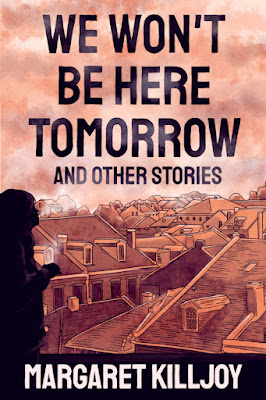 In an episode of her podcast Live Like the World Is Dying, Margaret Killjoy reframes the concept of eco-nihilism as something that creates room for personal agency amid the inevitability of climate change. If we embrace the fact that climate change is already here, and that we cannot prevent all the horrors ahead, does this not lighten our burden as individuals? Are we not then freed up to focus on what we can do and save, instead of trying to do and save it all?
 There’s a freewheeling energy to the introductions to El Porvenir, ¡Ya!, a 2022 Chicano science fiction anthology edited by Scott Russel Duncan, Armando Rendón, and Jenny Irizary. Both pieces, one by Ernest Hogan and one by Duncan(-Fernandez), proclaim with great celebratory fanfare the distinct possibilities and resurgence of the “Latinoid imagination” in contemporary science fiction. The absence of Latino rep in preceding sci-fi did not escape these editors’ notice, either, and the collection promises to introduce characters and contexts that illustrate the science-fictional nature of existence already intrinsic to many Latino communities living in blended, mestizo realities, especially in North America. How can there not be worth in celebrating, discovering, and cultivating as many of their imagined futures as possible?
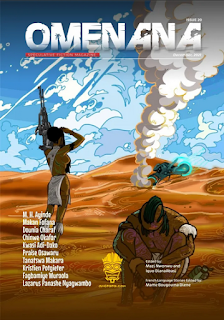 Omenana, the now-quarterly bilingual publication (English and French) of African and African diaspora SFF is still going strong with issue 20. The name of the publication is Igbo for both divinity and culture, and speaks to the speculative that permeates African histories, folklore, spirituality, and future-dreaming. As continental African writers show up more in Western SFF, it’s easy to overlook the key role of local African publications, especially as incubators for experimentation and new voices—but it matters immensely. The four-person editorial team of Omenana is Nigerian, with one member living in Canadian diaspora, and although they can only offer token payments for now, you can invest in their
 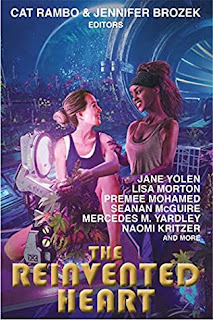 Sometimes an anthology is just a really good excuse to sit with strong and wide-ranging storytelling. Such was certainly the case with The Reinvented Heart, a collection of 24 stories centered on a wide range of emotional bonds, challenges, and opportunities. Across the board, the writing was deft and immersive, the stories were distinct and memorable, and many worked in striking conversation with their neighbours. The organization of this collection into three overarching “movements”—”Hearts,” “Hands,” and “Minds,” each opening with a small but potent bit of poetry by Jane Yolen, and revealing plenty of resonant story placements—also makes for an excellently curated reading experience, best read in the provided order. My only caveat, before I leap into high praise for the pieces themselves, is that I don’t think all of these stories reflect the anthology’s explicit mission statement. Then again, an anthology is often expected to carve out a singular role for itself in the market, and promotional material often makes sweeping claims to bring readers in.
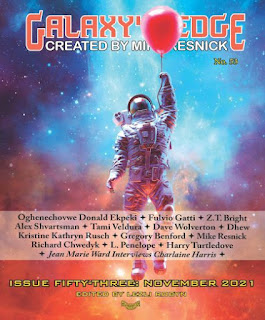 The latest Galaxy’s Edge is warmly introduced by editor Lezli Robyn, who is excited to share in this issue the winning story for The Mike Resnick Memorial Award for Best Science Fiction Short Story by a New Author. In this inaugural year for the award, the prize went to Z.T. Bright, for “The Measure of a Mother’s Love.”
 NewMyths’s latest issue offers fiction, poetry, and nonfiction with an overarching connection to science-fiction and fantasy; and yet, the work ranges widely across traditional genre set-ups.
 Editor Cécile Cristofari opens Reckoning 5 with a call to action shaped by how pandemic has significantly isolated us from nature; we cannot simply rely on nostalgia to deepen our fight against ongoing natural depreciation from climate change and other human-made devastations. Editor Leah Bobet adds, in her following editorial, that the quest for poetry here was shaped by little intimacies, “flecks of possibility” for reconnection with the world around us, in our most personable and fleeting interactions with the rest of nature.
 The Dark magazine’s November 2021 issue offers four stories that address different ways in which we find ourselves swept up by and made complicit in the unconscionable. In all, a binding thread is a perceived lack of agency—in some cases, even when the protagonist has absolutely made choices to do harm to others, too.
 If imitation is indeed the sincerest form of flattery, The Expanse series has a lot to be flattered by in John Appel’s Assassin’s Orbit, a work of mid-flung-future space opera involving multiple perspectives brought together by a mysterious case verging on interstellar incident. The book was even promoted as “The Golden Girls meets The Expanse,” a tagline that intrigued this reviewer, but unfortunately yielded disappointment when it turned out that the “Golden Girls” component was simply… having three major POV characters be older women. (I’d like to see someone try to call The Expanse’s Chrisjen Avasarala a “Golden Girl” simply because of her age.) Appel’s characterization of these women as women falls into tired territory at times, but if you put aside the marketing—and indeed, the whole Golden Girls reference entirely—the characters are still solid, sensible actors moving through a confidently-paced political intrigue.