
Jeffrey Andrew Weinstock, The Mad Scientist’s Guide to Composition. Broadview Press, 2020. Pp. 246, ISBN 978-1-5548-1445-9. $15.55.
Reviewed by Don Riggs
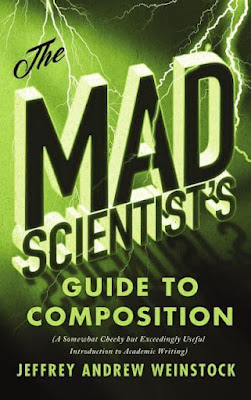 I have taught from Weinstock’s Mad Scientist’s Guide to Composition for three years now, and have found it to be extremely useful in presenting the basic principles of academic writing for students, including what instructors call the “mechanics” of writing, including punctuation, paragraphing, and transitions; finding and using sources for research papers (helpfully called “Graverobbing” with a nod to Victor Frankenstein); preliminary stages like brainstorming and outlining; “Conducting Experiments” as a way of developing strategies for informing, persuading, and evaluating; and in a stirring chapter, “The Monster Lives!” providing approaches to revising, peer review, and retroactive outlining; and finally, “Placating Ghosts,” or documenting sources “to Avoid Angering the Dead… and the Living.” In other words, a very conventional approach to forming and formulating an argument… but presented in the guise of horror movie tropes.


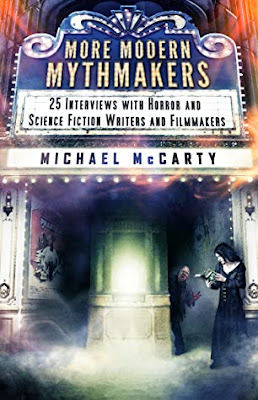 Michael McCarty has published dozens of books, especially non-fiction work about genre writers and artists. Crystal Lake Publishing is a relative newcomer, but they’ve already started distinguishing themselves by having a good eye for talent and publishing books that enhance the horror and science fiction community. More Modern Mythmakers is a strong collection of interviews that are a testament to McCarty’s access and eye, and the book would make a nice addition to your shelf, but it has some shortcomings that make it less than completely successful for a book of its kind.
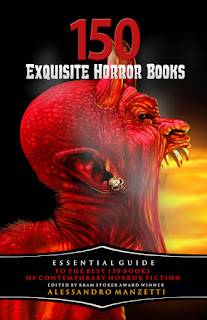 There is an art to creating a “Best of” list, whether that be a “Best of Shakespeare’s Plays” or “Best Singles by Take That.” You are inevitably going to make a lot of people angry. Art and tastes are subjective, and one man’s trash is another person’s treasure. And nowhere is this more true than with horror fiction. Fears are as individual as fingerprints. The film or book that terrify us and make chills run down our spine might make be utterly dull to another. And we horror fans are desperately protective of our best beloveds. I have seen knock-down drag-out fights between fans who can’t agree whether Matthew Stokoe’s Cows is trash or a masterpiece. So creating a volume in which you want to compile the best of modern horror fiction is a bit of a risky endeavour. Fortunately for all of us, Alessandro Manzetti decided to take on the challenge, and he took it on with grace, courage, and a library I can only dream of possessing.


