Showing posts with label thriller. Show all posts

Tuesday, May 03, 2022

Henry, The Quarter Storm (2022)

Veronica G. Henry, The Quarter Storm (Mambo Reina #1). 47North, 2022. Pp. 287. ISBN 978-1-54203-391-6. $13.49.

Reviewed by Julie Reeser
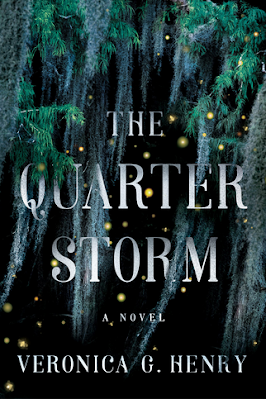
Veronica G. Henry is not from New Orleans and does not practice Vodou, but she consulted experts for both, and this careful consideration shines in details and authorial voice in her mystery novel The Quarter Storm. Unlike many past representations of Vodou, Henry focuses on the history and faith, and leaves the fetishization behind. This second book is a departure for Henry from the dark fantasy of an evil carnival, and instead brings characters who could easily be found during a walk through your city, and a murder that feels ripped from the headlines. (I originally assumed this book was self-published due to the surprisingly neutral and forgettable cover for the ebook; 47North turns out to be an imprint of Amazon Publishing, and they offer their acquistions through Kindle Unlimited—which is how I found it—as well as paperback and audio editions.)

Thursday, February 25, 2021

Cohen, Nick Bones Underground (2019)

Philip M. Cohen, Nick Bones Underground. Koehler Books, 2019. Pp. 371. ISBN 978-1-63393-920-2. $19.95.

Reviewed by Don Riggs

Nick Bones Underground is a slipstream novel, combining elements of Science Fiction, Urban Fantasy, and the Crime/Detection genre. It is set in a vague time frame, given that at least one of the characters is a Holocaust survivor, albeit a very old one, and computer technology has advanced into the realm of Artificial Intelligence, which impacts the daily life of the narrator-protagonist, Nicholas Friedman, a professor of Comparative Religions at a university in New York City. Life in the city has been inflected by something which is referred to as the “Great Debacle,” which is never completely explained or defined except at one point as having had to do with computers’ developing a degree of free will and acting in unpredictable ways. The most evident example of this cybernetic behavior comes in the form of Maggie, the A.I. in the apartment of the narrator, who, having become a transgender computer, now yearns to become an incarnation of Marlene Dietrich.

Tuesday, January 05, 2021

Kewin, Eye Collectors (2020)

Simon Kewin, The Eye Collectors (a story of her Majesty’s Office of the Witchfinder General, protecting the public from the unnatural since 1645). Elsewhen Press, 2020. Pp. 288. ISBN 978-1-91140-964-9. £10.00 pb/£2.99 e.

Reviewed by Andy Sawyer

The “Magic Police” is a firmly-established sub-genre by now, but Danesh Shazan of Her Majesty’s Office of the Witchfinder General is an interesting addition to their ranks. Most people think that the “office” is a historical anomaly, “a ridiculous piece of quasi-mediaeval pagentry, like so much of the British governmental and judicial systems,” but in fact it exists to protect the public from unutterable and eldritch powers from Beyond. Danesh, a recently-recruited Acolyte in the Welsh branch of the office, headed by the terrifying Campbell Hardknott-Lewis, works with mundane cops on cases which have a flavour of the supernatural about them. And when he’s called in by D.I. Nikola Zubrasky to investigate a murder in Cardiff, this “flavour” is worth at least three Michelin Stars.

Tuesday, July 26, 2016

Whiteley, Skein Island (2015)

Aliya Whiteley, Skein Island. Dog Horn Publishing, 2015. Pp. 200. ISBN 978-1-907133-85-5. £10.99.

Reviewed by Valeria Vitale

Skein Island, by acclaimed horror and fantasy author Aliya Whiteley, is a supernatural mystery novel that combines the investigation of uncommon events with the investigation of the characters’ feelings and motivations. The story has three main settings, as well as three different narrative streams, each of them featuring detours and digressions, that merge smoothly towards the end. The first is a small island in British waters, the Skein Island the book is named after, where only women are allowed. The place was bought by an eccentric millionaire who had (apparently) used her means to create and maintain a unique retreat where women could focus solely on reaching that self-awareness, strength, or peace of mind they felt was missing from their current lives; a place without men where women could be absolutely safe. The rich woman would offer, cyclically, free two-week stays at the island to a small number of women, selected from among the many applications received. During these two weeks, the women wouldn’t have to worry about anything but their own well being: everything else would be taken care of by an all-female staff.

Friday, October 30, 2015

Mullaney, Eternal Blue Sky (2015)

Marguerite Mullaney, Eternal Blue Sky. SGW Books, 2015. Pp. 262. ISBN 978-0-69245-217-2. $12.00 pb/$6.99 e.

Reviewed by Djibril al-Ayad

Eternal Blue Sky is an indie-published historical adventure/fantasy novel involving slightly far-fetched technology and time travel to the crucial period of Mongolian history. The land and skies of Mongolia are almost a character in themselves, which is just as well since most of the human characters range between unsympathetic and downright repugnant; it really is a strikingly unromantic view of the exotic past. Despite some writing flaws and slightly grating cultural appropriation, and the fact that many of the basic elements of this book were not really my cup of tea (it is an historical fantasy adventure/thriller with an ostensibly science fictional setting, rather than fiction about the science or even social themes), the premise itself is interesting, and the adventure at times exciting and gripping.

Monday, April 13, 2015

Cathcart, Fugazi of Room 39 (2014)

M.K. Cathcart, The Fugazi of Room 39. Self-published, 2014. Pp. 161. ISBN 978-1-5054-3472-9. £5.99.

Reviewed by John Marr

The Fugazi of Room 39 is the debut, self-published novel from author M.K. Cathcart, a dystopic science fiction thriller set in a future United States following a second Korean War. So what, exactly, is a fugazi, as referred to in the title of this work? Unfortunately, having striven to the end of this short work, I’m afraid to report that I am still none the wiser. There is an awful lot that remains unclear after turning the final page of this book, but these lingering mysteries owe more to the poor quality of the prose than misdirection or subtle plotting.

Tuesday, November 18, 2014

Michaud, Hunter’s Trap (2014)

Anne Michaud, Hunter’s Trap. Sad Ghost Press, 2014. Pp. 256. ISBN 978-1-501008-82-5. $15.99 pb/$3.99 e.

Reviewed by Valeria Vitale

Hunter’s Trap, written by Ann Michaud and published by Sad Ghost Press, is a blood-chilling paranormal thriller unveiling secret dangers and ghostly inhabitants hidden in a snowy wood. Brothers Dayton and Jeremy, aged 17 and 12, investigate what happened to their father, who went out few days earlier for a hunting trip with his friends and never come back, the group of men seeming to have vanished into thin air. Michaud moves smoothly between genres, convincingly mixing elements that belongs to adventure, thriller, and ghost stories, sewing them together with impeccable prose. Unlike other thrillers or mystery stories, where the plot simply leads to the single, final twist or unsuspected truth, Hunter’s Trap offers a more complex and interesting approach.

Monday, September 08, 2014

Baker, The Boost (2014)

Stephen Baker, The Boost. Tor Books, 2014. Pp. 336. ISBN 978-0-7653-3437-4. $24.99.

Reviewed by RJ Blain

The Boost by Stephen Baker is a science fiction thriller, delving into how society could change if everyone was always connected to the internet—or something similar to the internet: an intricate network accessed by brain-implanted chips. In this world, ‘wilds’ are those who have chosen—or have been forced—to live outside of the network. The boost offers individuals non-stop access to information and virtual reality, augmenting their real lives with a super-enhanced version of the internet. But underneath the veneer of a technological utopia is a risk few expect: The Chinese have included special code in the Americans’ boost code, which could leave the world without any privacy—and worse. When Ralf, a software developing prodigy, tries to protect society from the new code being uploaded into boosts all around the world, he’s caught and his boost is ripped out of his head. Forced to live as a wild, he must join with those who share his dilemma, not only for his sake, but for the freedom of everyone using the boost. The boost is an interesting take on a thriller novel, marrying dramatic excitement with social and political issues relevant to a world dominated by virtual reality.

Sunday, June 29, 2014

Connell, The Galaxy Club (2014)

Brendan Connell, The Galaxy Club. Chômu Press, 2014. Pp. 202. ISBN 978-1-907681-25-7. £10.00.

Reviewed by Djibril al-Ayad

The latest short novel by inventive and experimental fantasy author Connell, published by the rather wonderful, weird Chômu Press, is typically hard to categorize. Billed as “noir” in the press pack, the book does indeed involve downbeat, not terribly sympathetic characters in various degrees of chronic struggle or desperation and whose conflict in the story is between letting their lives get even worse or scrabbling to hold on with their fingernails for another day, set in a mid-twentieth century American locale. But on the other hand it is also a road novel, with hitchhikers, car chases, lonely towns to pass through and creepy strangers to pass through them, and even elements of the beatnik, with trippy images, multiple characters popping legal or illegal drugs and drinking excessively, and a sense of reality that verges between magical realist and mythological. Above all these, it boasts unmistakably literary features, including unreliable narrators, multiple irrational and inanimate points-of-view, language deployed to disorient the reader, character and imagery overriding plot, and an unclear, barely satisfying dénouement.

Wednesday, November 13, 2013

Alexander, Past Present Future (2013)

N.J. Alexander, Past Present Future: A social network thriller. Roundfire Books, 2013. Pp. 309. ISBN 978-1-846949-70-8. $20.95 / £11.99.

Reviewed by Rochelle Spencer

N.J. Alexander’s “social media thriller,” Past Present Future is both fascinating and frustrating. What fascinates: set in the UK, in 2008, against the backdrop of the beginnings of a global recession and the rise of Facebook and Twitter, Alexander’s novel reveals our worst fears about the economy and technology. What frustrates: most of the book’s most thrilling moments occur online, as the protagonist, Nicole, reads the Facebook messages of Anthony Hope, a moderately successful American singer and former co-worker who may—or may not—be stalking her. Alexander has a talent for blending classic surreal imagery with an exploration of the dangers of modern technology, and readers will enjoy how many of Anthony and Nicole’s Facebook posts reference Lewis Carroll’s Alice in Wonderland. Still, despite this psychological tension, I wanted to see more of these characters, particularly Nicole, in real life. In other words, while I love that this book pays so much attention to our virtual lives, the problem with having few in-person moments is that it becomes difficult to understand Nicole and Anthony’s characters. Readers will recognize, for instance, that we present a more glamorous image of our online lives, that our Facebook pages omit or downplay moments that show us as less than clever, witty, or strong. So, every time Anthony posts to his Facebook page, it’s hard to figure out if he’s sending Nicole a veiled message (this is her belief) or if it’s just an innocuous coincidence. And, without real-life action, the reader views Nicole and Anthony as online strangers, not as actual friends we care about, and it becomes hard to understand or sympathize with either of them.

Sunday, June 16, 2013

De Grave, Hour of Lead (2012)

Kathleen De Grave with Earl Lee, The Hour of Lead. See Sharp Press, 2012. Pp. 255. ISBN 9781937276270. $14.95.

Reviewed by Djibril al-Ayad

The Hour of Lead is an earnest novel, published by the anarchist and social activist See Sharp Press, with science fictional themes including corporate dystopia and time travel, with a nod to the Butterfly Effect, but written by an author with no evident background in science fiction literature or fandom. Set in a near future Kansas facing environmental collapse where an unfettered capitalist corporation-government runs the world to neocon wet-dream principles, with a psychiatrist as protagonist and his astrophysicist wife as deuteragonist (for although many scenes are told from her perspective, she is clearly second fiddle in this book), the novel demonizes not only free-market capitalism but also nanotechnology and other invasive environmental and medical sciences. There are several problems with this story, from characterization to plot contortions and false-dilemmas driving the action, but it is an engaging read, and it does succeed at the authors’ stated aim which is to present moral quandaries without offering any easy answers.

Saturday, January 19, 2013

Caraway, To Evil Comes a Daughter (2012)

Allen Caraway, To Evil Comes a Daughter. Amazon, 2012. Pp. 386. ASIN B009TBGOYW. $4.99.

Reviewed by Kate Onyett

To evil might come a daughter; to the ranks of ebookery comes this offering from a writer who has under his section on Amazon the title of “World Renowned Tap-Dancing Hamster Instructor and three-time winner of the Most Amusing Pet Chipmunk award.” One might expect chirpy brightness, nay even a little of the old tomfoolery. But no, this is a tight thriller, a paranormal murder-mystery that stands foursquare to its brief and delivers with confidence.

Wednesday, December 19, 2012

Zendell, Wednesday’s Child (2010)

Alan Zendell, Wednesday’s Child. BookBrewer.com, 2010. Pp. 291. ISBN 978-1-6115604-3-5. $14.00 (print)/$7.99 (e-book).

Reviewed by Kip Manley

Technothrillers, the ubiquitous “they” say, are just science fiction novels in which the president’s a character; science fiction, the critic Farah Mendlesohn has said, can be seen as an argument with the universe. The president doesn’t appear in Wednesday’s Child, the second novel from Alan Zendell, and what arguments it makes are hectoring at best—but with its present-day setting, its spies and terrorist threats, this competently written wish-fulfillment wants very much to be a technothriller when it grows up.

Saturday, November 10, 2012

Merrill, The Final Act (2012)

F.R. Merrill, The Final Act: From Woodstock to Broadway. From Death to Eternity. Red Fox Publishing, 2012. Pp. 266. ISBN 978-1466214941. $12.95 print/$9.99 Kindle.

Reviewed by Jessica Nelson

Faith Straton has just gotten her big break. She had always loved the Native American stories her grandmother used to tell her. After her dreams of dancing on Broadway fell to the wayside, Faith became a dance instructor. Over time, she decided to merge her passions, so Faith created her own theatrical production, melding the stories her grandmother used to tell with dance. Now, her play is set to show on Broadway, bringing back echoes of former dreams. But when Faith and her daughter, Amanda, move to New York City, Faith gets more trouble than she bargained for.

Friday, September 07, 2012

Ward, Tube Riders (2012)

Chris Ward, The Tube Riders. Amazon Digital Services, 2012. Pp. 516. ISBN 978-1475116502/ASIN B007LVFSP8. $14.99 print/$3.31 Kindle.

Reviewed by Paul Wilks

The Tube Riders, written by Chris Ward and available through Amazon Digital Services, is a gritty dystopian novel set in future Britain, known as Mega Britain. Now a corrupt, deliberately isolated and socially devastated island, the government rules oppressively and the poor scavenge for food under a persistent threat of suspicion by the Department of Civil Affairs—almost like an Orwellian Thought Police outfit.

Tuesday, September 04, 2012

Reamer, Primary Fault (2012)

Sharon Kae Reamer, Primary Fault. Terrae Motus Books, 2012. Pp. 366. ISBN 9781475123098. $14.95.

Reviewed by Martha Hubbard

This is an remarkable first novel by a woman writer with impressive scientific credentials. Raised in Texas, Sharon Kae Reamer studied Geophysics at the University of Texas then, Ph.D in hand, moved to Germany to start a family and a career as a seismologist; after several years running her own consulting firm she returned to teaching at the University of Köln. The depth of her seismological and geographical knowledge shines through every page and adds credibility to the story details of this very readable, contemporary fantasy thriller.

Saturday, August 11, 2012

Nightmare (2012)

Nightmare (2012), dir. Nic Collins; starring Nicholas Wicht, Pete Navis, Alexandra Leopold.

Reviewed by Paul Wilks

Nightmare, a short sci-fi film directed by Nic Collins, is a monochrome thriller that broods with paranoia and intrigue, even from the first scene. It tells a story of Carl, a man who has sinister and violent dreams that each feature a brutal murder. However, the dream scenarios then quickly then happen in real life and Carl is motivated to kill the killer before the next murder occurs.

Tuesday, July 31, 2012

O'Brien, Cerulean Dreams (2011)

Dan O'Brien, Cerulean Dreams. CreateSpace, 2011. Pp. 345. ISBN 9781467971201.

Reviewed by Jo Rhett

Cerulian Dreams is a self-published dystopian/noir novel by prolific author and screenwriter Dan O'Brien. The book discusses a potential method for and the effects of population mind control. The story is told from the point of view of a retired detective who is trying to help a young girl escape the city and the obsessively controlling government. The story evolves as they discover deeper truths about the origin of Cerulean Dreams. A story with a lot of action and huge promise, perhaps leaving the reader a little too detached from the characters, but with powerful and futuristic social ideas that are well explored.

Sunday, July 15, 2012

Hughes, Coanda Effect (2010)

Rhys Hughes, The Coanda Effect. A Corto Maltese Adventure. Ex Occidente Press, 2010. Pp. 125. $55.00.

Reviewed by Jessica Nelson

The Coanda Effect is a novel by Welsh writer Rhys Hughes, author of numerous novellas, novels and short fiction works, including the Fanny Fables series and The Crystal Cosmos. This attractive limited edition hardcover novel, a homage to the Corto Maltese stories of Hugo Pratt, is a story about journalist Lloyd Griffiths and the man he comes to idolize, gentleman adventurer Corto Maltese. We first meet our protagonists when they first meet each other, at an air show in Italy. Corto Maltese has such a vast impact on Lloyd that the journo begins to change the patterns of his own life, on a quest for adventure. In time, the two meet again and set out on a joint venture to stop the evil plot of a madman set on taking advantage of the second Balkan War.

Thursday, June 07, 2012

Hamer, The Charter (2012)

Gillian E. Hamer, The Charter. Triskele Books, 2012. Pp. 399. ISBN 978-0-9571932-1-5. £2.99 e-book/£6.99 print.

Reviewed by Martha Hubbard

In many ways The Charter is a straightforward crime-thriller. Sarah Williams Morton has returned to Moelfre, the small Welsh town on the Island of Anglesey where she grew up, to attend the funeral of her father, Professor Owen Williams. She had not been back there since she fled her father’s drunken, controlling, behavior many years before. Now a successful Londoner, with her handsome, rich, husband, Dominic Morton, beside her, she is painfully aware of the local communities resentment of her and their animosity towards her father.